
Browser games and pointless experiments. Nothing to install.
Browser games and pointless experiments. Nothing to install.
Click tiles to build a wall. Trap the cat before it escapes the board.
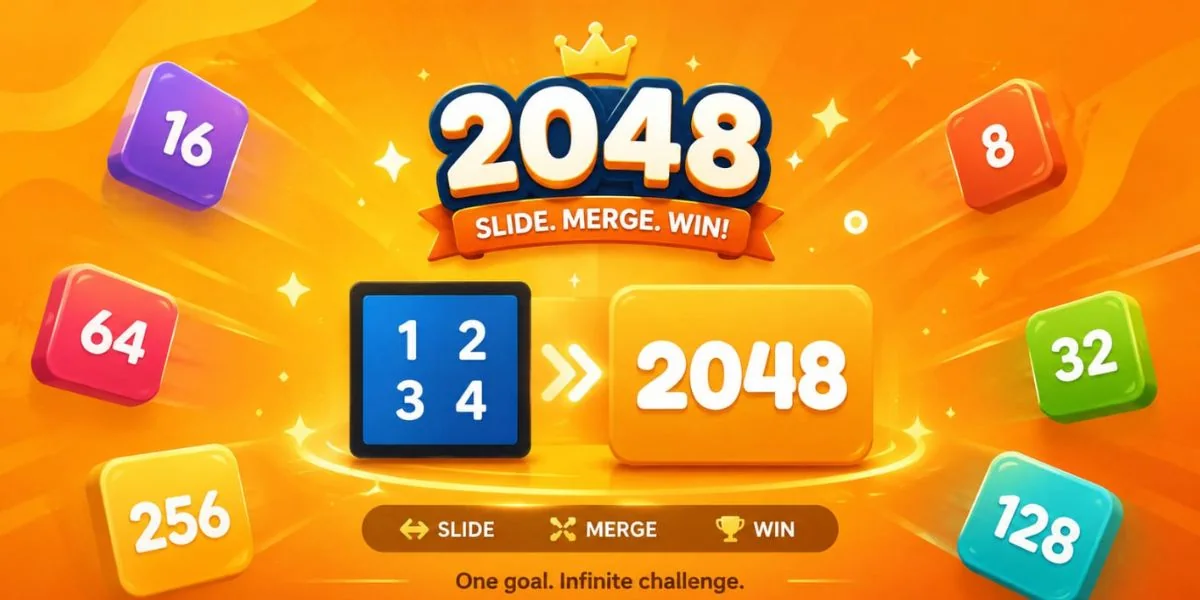 2048Slide and merge tiles to reach the magic number
  Rock Paper Scissors vs AIAn AI that learns your patterns
  Reaction Time TestHow fast can you click when it turns green
  Draw a Perfect CircleOne freehand loop, scored to the percent
 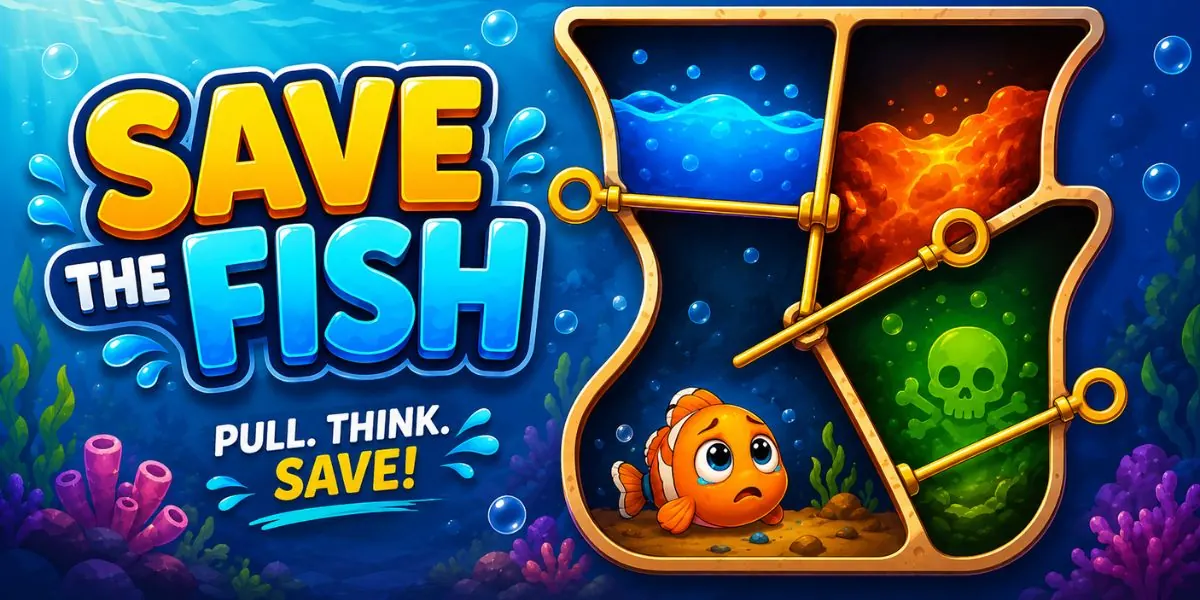 Save the FishPull the pins in the right order
  Infinite CraftStart with four elements. See how far it goes
  Draw Logos From MemoryTest how well you remember famous brand logos
  Fold Paper to the Moon42 folds. Exponential growth, visualized
 A cat sits in the middle of a hexagonal board. Every tile you click becomes a wall. After each of your moves the cat takes one step along its shortest route to the edge. Wall it in completely and you win. Let it reach the edge and it escapes.
Underneath the cartoon it is a pursuit problem on a graph. The cat runs a shortest-path search to the boundary every turn, so it is not wandering and it is not guessing. If a route out exists, it will find it, which means you cannot win by reacting. You have to close routes before the cat needs them.
New players build a wall next to the cat and watch it simply walk around. The cat is faster at finding routes than you are at blocking them, so proximity is the wrong instinct.
The board starts with a random scatter of walls, and that scatter matters enormously. A layout with several walls clustered on one side hands you most of a ring for free. A sparse, evenly spread layout can be close to unwinnable against a cat that always takes the optimal route. If a board looks hopeless after three moves, it may well be, and restarting is a legitimate strategy rather than giving up.
2048 rewards the same habit of playing position rather than reacting to what just happened, and Water Sort Puzzle asks you to plan several moves before committing. All of them are free, run in the browser and need no account.
Place walls two or three tiles away from the cat rather than next to it, on the side it is heading toward, and think about completing a ring rather than building a line. Connect to the starting walls and the board edge instead of beginning fresh.
It runs a shortest-path search to the board edge every turn, so it always takes the best available route out. It is not guessing, which is why blocking reactively never works.
The starting walls are placed randomly. A clustered layout gives you most of an enclosure for free, while a sparse even scatter can be close to unwinnable against an optimal cat. Restarting a bad board is a reasonable move.
It varies hugely with the starting layout, but a well-played game usually closes in somewhere between fifteen and thirty walls.
Yes. Tap tiles to place walls. The hexagonal board scales to your screen.
Yes, with no download, no sign-up and nothing stored on a server.
Yes. The daily gives everyone the same board, generated from the date, and it resets at midnight UTC. Your result is recorded and the strip above the game shows your last seven days and your current streak. Nothing is sent to a server, so the streak lives on your own device.